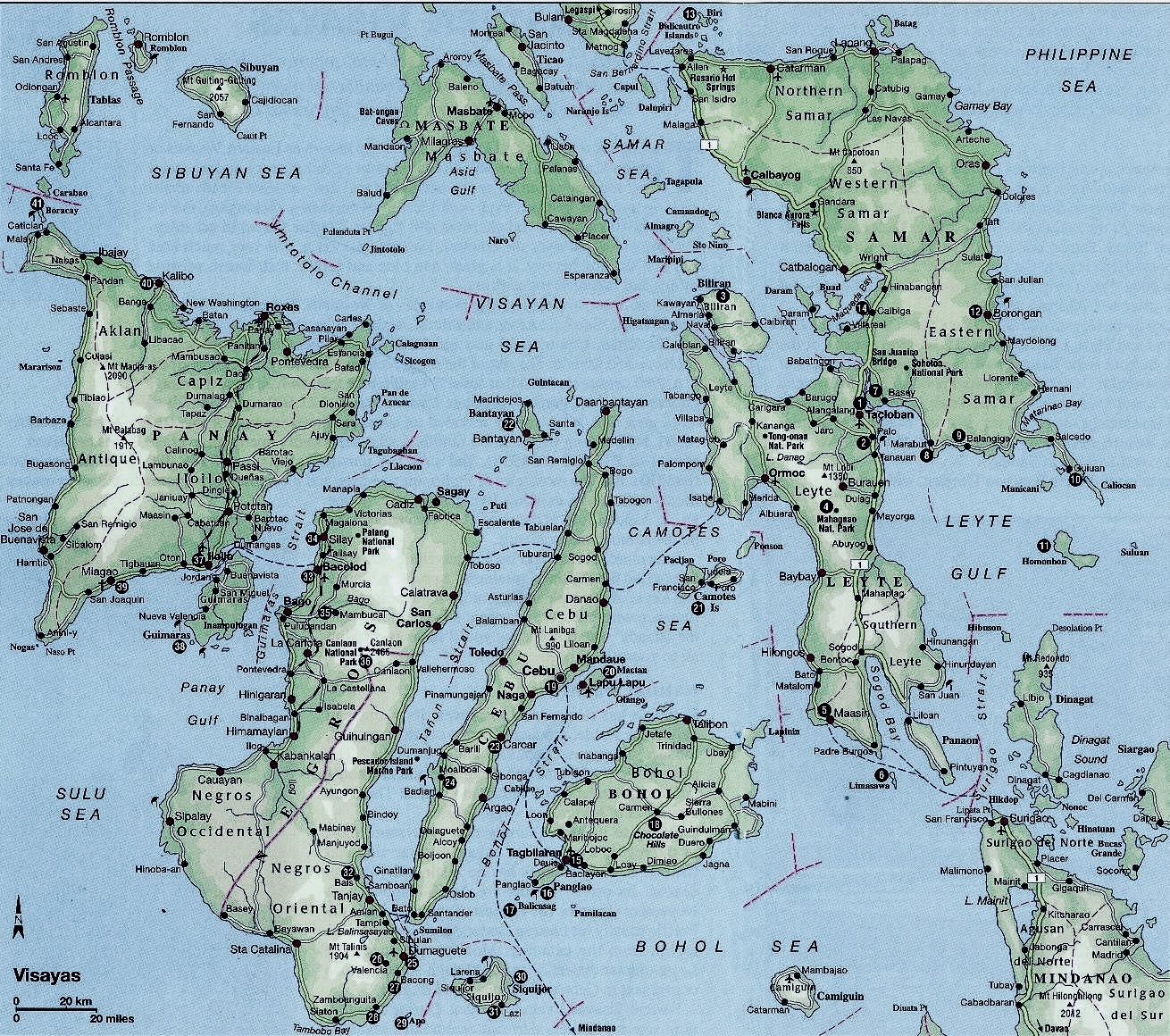
We learned mahjong from our father who grew up in the Visayas. We have seen people playing this style coming from all over the Visayan islands including Cebu, Panay, Negros, and Leyte. The gameplay for Visayan mahjong (also Bisaya mahjong) is identical to that of the standard Filipino variant we go over in our original blog post on the game.
But unlike standard Filipino mahjong, Dad’s mahjong makes use of the winds and the so-called “dragon” tiles. So if you draw one of these tiles, instead of exchanging it for a new tile like a flower, you will keep it in your hand to form a pair, pung, or kang. Or you can use it to form a special báhay like beauty or NEWS, as discussed below.
Beauty
These three tiles are referred to collectively as beauty in Visayan mahjong, because, well, look how pretty they are! They are also called “dragons,” a term borrowed from American mahjong.

The first is called dagger in Visayan mahjong but may also be referred to as “red,” “pulá,” or “red dragon.” In Chinese, this is called “chun” or “zhōng” depending on the spelling system being used, and it means “center” or “middle.”
The second is called berde, also known as “green” or “green dragon.“ In Chinese, this is called “fā” which means “wealth” or “prosperity.”
The last is called mirror or window due to its shape, and is also known as the “white dragon.” In Chinese this is called “bái” meaning “white,” or “bái ban” meaning “white board.” This was originally a blank tile (which is still how it’s represented in Japanese Riichi mahjong sets).
There are four copies of each.

The beauty tiles can be drawn, discarded, and seized just like any of the suited tiles. Beauty tiles can be used to form a pair, a pung (three-of-a-kind), or a kang (four-of-a-kind).
Beauty also refers to a special báhay consisting of one of each: dagger, berde, and window. This is an ambition that gets immediate payout upon declaration! However, there are a few caveats. You can only form this báhay from tiles in your hand or taken in turn (similar to chow). Additionally, beauty must be declared in the first round.
For example, suppose you are not the dealer, and you have dagger and berde after the tiles are dealt. And then suppose that before your first turn, the person before you tosses a mirror tile. In this situation, you can seize the window tile and declare beauty receiving an immediate payout.
The same is true if you were to draw the window tile from the wall on your first turn.
However, once the first round is over, if you haven’t declared beauty, you can only use a beauty tile to form a pair, pung, or kang.
The Winds

The winds are named after the cardinal directions: North, East, West, and South. There are four copies of each.

The winds can be used to form pungs, kangs, or pairs as well, and can be drawn, discarded, and picked up just like any of the suited tiles.
NEWS
NEWS (pronounced like news) is a special báhay that, like beauty, can only be formed and must be declared within the first round. It consists of one of each of the winds. This is also an ambition that gets immediate payout upon declaration. Because it is a four-tile báhay, the player must take a gift (an extra tile) from the flower wall (similar to what happens with a kang or secret).
Payouts
The payout rules for Visayan mahjong are mostly the same, but with some key differences owing to the reduction in the number of flowers. The most notable differences are the addition of beauty and NEWS as ambitions and the loss of thirteen flowers as an ambition. The final payout rules remain the same.
Instant Payout
Get payout from other players immediately upon declaration of ambition.
- Beauty ½ (can only be declared in the first round)
- NEWS ½ (can only be declared in the first round)
- Sagása, Secret ½
- Kang ¼
- No Flowers ¼ (can be declared in the first round and again at the game’s end if you still have no flowers)
Mag-madyong na ta!
 mahjongero
I love this post since I also play the Visayan variant of Filipino mahjong, and Filipino mahjong being one of the Asian mahjong variants that play with 16 tiles and out with 17 tiles aside from Taiwanese mahjong. Love the bits of comparison between Visayan and Filipino that the rest know since we treat the honor tiles as part of the hand and as melds, with some special “treatment” that can give some payouts. Here in Iloilo, aside from the “Beauty” meld with the red, green, and white tiles; we also have what you called “Ngo Ngo”, “Ngo-ngo”, which is any of the 3 out of 4 winds you can expose just like the “Beauty” meld. It is optional and can be agreed between parties if they want to have it or not.
I don’t know if you know these terms like:
>Before – expose the joker first before each player can take the replacement tile from the flower wall (others might call it “dead wall” or “kong box”) after you expose your flower/s and the “NEWS”
>After – expose the joker after everyone takes their replacement tile from the flower wall after you expose your flower/s and the “NEWS”
>No Pong No Joker – this means that the only the dealer has the knowledge of the current joker tile in a round and the other player has to pong. This is done after the dealer declared “before” or “after” and then the dealer takes the joker tile for the round and only the dealer can see the joker while others don’t unless they’re going to pong.
>Askad – simply a thrown joker either unintentionally or on purpose.
Any Visayan players might verify this info but hope this helps for more info.
LikeLiked by 1 person